This guide is general reference, not a service manual. Intervals, torques and fluid specifications vary by engine rating, build and duty, and the manufacturer's own operation and maintenance manual is the authority. Part numbers change with serial number — send us yours and we will confirm the right parts before you order.
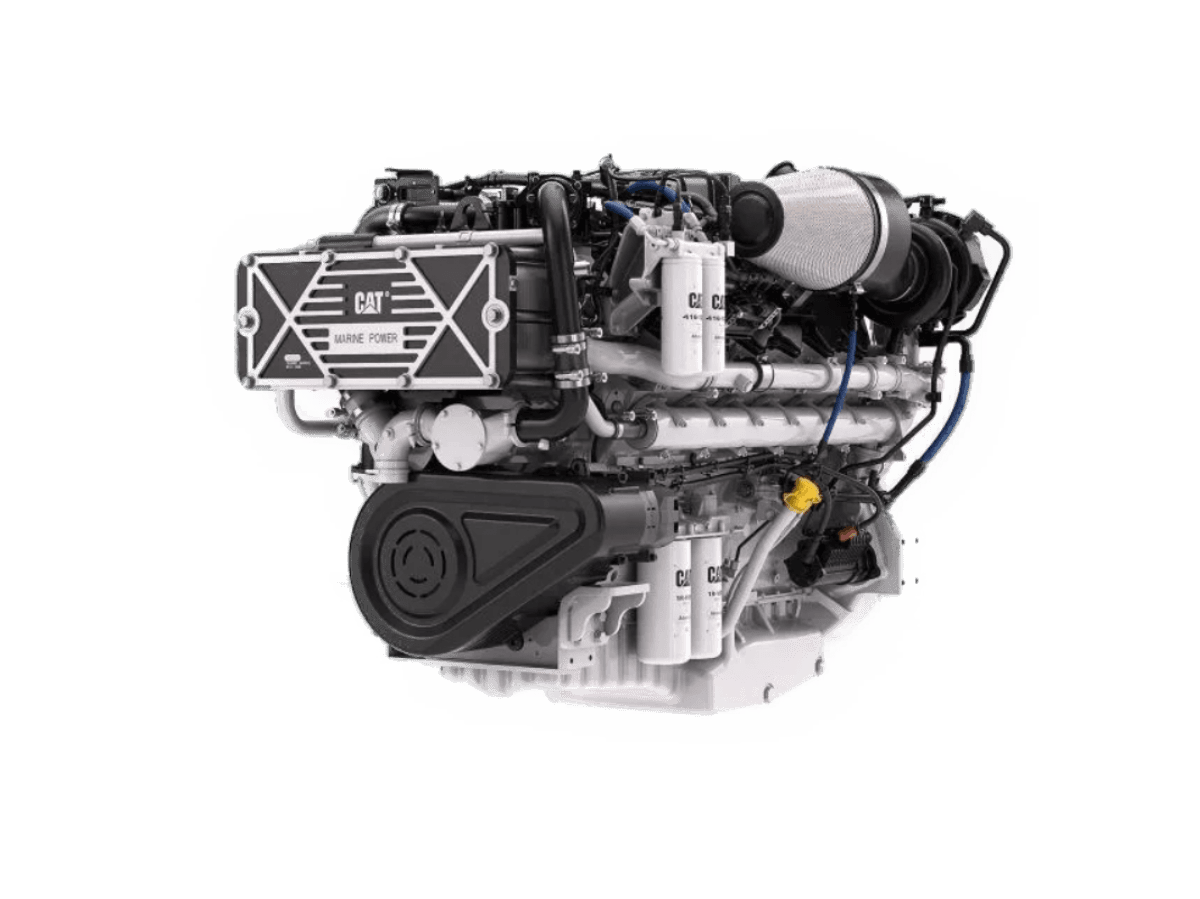
The Yanmar 12AYM-WGT is a 38.8-litre V12 marine diesel engine rated at 1,822 hp (1,360 kW) at 2,100 rpm, with 8,540 Nm of torque at 1,500 rpm. Turbocharged and aftercooled, with electronic common rail injection, it powers high-speed ferries, crew transfer vessels, patrol and rescue craft and motor yachts of 45–65 m. This guide sets out the engine's specifications, Yanmar's service intervals, the parts each interval calls for, the faults most often seen in service, and the spares worth carrying on board.
Engine overview
Key specifications
Configuration: 12-cylinder, 60° V-engine
Power output: 1,822 hp (1,360 kW) at 2,100 rpm
Torque: 8,540 Nm (6,300 lb-ft) at 1,500 rpm
Displacement: 38.8 litres (2,368 cubic inches)
Bore and stroke: 155 mm x 180 mm
Aspiration: turbocharged with air-to-water aftercooler; single or twin turbocharger depending on rating
Fuel system: electronic common rail direct injection with piezo-electric injectors
Cooling system: fresh-water cooled with heat exchanger
Dry weight: approximately 3,100 kg
Typical applications
High-speed commercial ferries
Crew transfer vessels, including wind-farm service
Fast patrol and rescue craft
Motor yachts of 45–65 m
Charter and expedition vessels
Offshore support vessels
Commercial fishing vessels requiring high speed
The engine's low-end torque suits heavy loads, rough sea conditions, towing and quick acceleration from displacement speed; it is designed for sustained operation at high rpm on fast-ferry schedules and emergency-response duties.
Service intervals
First 50 hours
Break-in service.
First oil and filter change
Check all mounting bolts
Inspect all connections and hoses
Verify cooling system operation
Check belt tension
Inspect the turbocharger
During the break-in period avoid full-load operation, vary the rpm rather than holding a constant speed, check for leaks daily and allow longer warm-up periods.
Every 250 hours
Or every three months, whichever comes first.
Engine oil and filter change
Fuel pre-filter element replacement
Check engine mounts
Inspect the raw-water pump
Visual inspection of all systems
Check cooling system levels
Inspect drive belts and tension
Every 500 hours
Or every six months.
Complete oil and filter change
Replace all fuel filters (pre-filter and fine filters)
Replace air filter elements
Change the raw-water pump impeller
Inspect the turbocharger for oil leaks
Check all hose connections and clamps
Inspect heat exchanger anodes
Valve clearance check, where specified
Every 1,000 hours
Or annually. All 500-hour items, plus:
Replace the coolant filter
Complete cooling system inspection
Inspect and clean the heat exchanger
Replace the crankcase breather filter
Inspect fuel injectors
Check turbocharger shaft play and condition
Test all alarms and safety systems
Compression test on all cylinders
Inspect engine mounts and damper plate
Every 2,000 hours
Or every two years. All 1,000-hour items, plus:
Replace all coolant and flush the system completely
Fuel injector testing, with service or replacement as required
Complete turbocharger inspection or rebuild
Valve adjustment and inspection
Timing gear inspection
Replace all belts regardless of condition
Inspect the intercooler core
Every 4,000 hours
Major inspection.
Complete cylinder head inspection
Injector replacement recommended
Turbocharger rebuild or replacement
Major component inspection to Yanmar specifications
Maintenance parts by system
Lubrication
Oil capacity: approximately 95 litres including filters
Oil specification: Yanmar-approved oils; API CF-4 or CG-4 minimum, ACEA E7 recommended; SAE 15W-40 for normal operation (10°C to 40°C), SAE 10W-30 for cold climates (0°C to 30°C)
Oil filters: three full-flow filters per engine, all replaced at every 250-hour oil change; genuine Yanmar filters protect the turbocharger and injection system, and Yanmar warranties may be void with incorrect oil
Run the engine to operating temperature before draining, check the old filters for metal particles, and reset the oil-change interval on the ECU if fitted
Fuel system
The common rail system operates at over 2,000 bar (29,000 psi); contaminated fuel destroys injectors, water in fuel causes immediate damage, and poor-quality filters can cause catastrophic injection-pump failure
Pre-filter (water separator): replace every 250–500 hours; inspect the water bowl at every engine check and drain water daily in humid or marine environments
Primary fuel filter: 10–30 micron; replace every 500 hours; protects the high-pressure pump
Fine fuel filter: 2–5 micron; the last defence before the common rail
Prime the fuel system properly and bleed it completely after every filter change; fuel filters should be genuine Yanmar items
Injectors: common rail piezo-electric type with an expected life of 4,000–6,000 hours; testing recommended at 2,000-hour intervals; signs of failure are rough running, smoke and loss of power
Air intake and turbocharging
Air filter elements: heavy-duty dual-stage filtration; replace every 500 hours minimum, more often in dusty environments or island operations; inspect the restriction indicator at every check; replace rather than clean
Turbocharger: inspect at every 500-hour service for whistling, grinding, vibration and oil leaks around the housing; shaft play check at the annual service; expected service life 6,000–10,000 hours, with a rebuild typically required at 8,000–12,000 hours
Intercooler: air-to-water type cooled by the engine cooling system; inspect for leaks at the annual service, check for salt build-up and clean the tubes annually in sea-water-cooled systems; pressure test during major overhauls
Cooling system
Coolant: Yanmar Long Life Coolant (LLC) only, pre-mixed 50 per cent concentrate and 50 per cent distilled water; automotive coolant is incompatible with the marine aluminium components; system capacity approximately 150 litres including the heat exchanger and pipework; replace every 2,000 hours or two years
Coolant filter: carries the supplemental coolant additives that prevent cavitation corrosion on the cylinder liners; replace at 1,000-hour intervals
Raw-water pump: engine-driven with a rubber impeller; replace the impeller every 500 hours minimum, more often in sandy or silty water; inspect for missing vanes, cracks, hardening and deformation; a failed impeller overheats the engine within two to three minutes; fit new impellers with glycerine or soapy water, check the pump body for scoring, replace the faceplate gasket every time and confirm the pump primes after service
Heat exchanger: tube-and-shell type with sacrificial anodes; inspect anodes every 500 hours and replace at 50 per cent depletion; clean tubes annually in salt-water service; pressure test at major services
Expansion tank: pressurised system, typically 7–14 psi; check the coolant level weekly and the cap pressure rating annually; never open when hot
Drive and electrical
Belt drive: poly-V or multiple V-belts driving the alternators, raw-water pump and coolant pump; inspect tension every 250 hours; replace every 2,000 hours or sooner if cracking or glazing is visible; loose belts cause overheating and charging failure
Flexible coupling and damper plate: absorbs torsional vibration; inspect at the annual service for cracks, oil contamination and loose bolts; typical replacement at 6,000–10,000 hours
Sensors: coolant temperature, oil pressure, fuel pressure, boost pressure, throttle position and rpm sensors should be genuine Yanmar items
Common faults and their causes
Fuel system contamination
Symptoms: rough running or misfiring, black or white smoke, loss of power, hard starting or no-start, engine warning lights
Causes: contaminated fuel (water, algae, debris), poor-quality fuel filters, bacterial growth in tanks, water ingress through tank vents or filler caps
Prevention: genuine Yanmar fuel filters changed at 500-hour intervals, fuel biocide in tropical climates, annual tank polishing, a clean water-separator bowl, daily water draining in humid environments
Parts affected: injectors, high-pressure pump, common rail
Cooling system failures
Symptoms: high-temperature alarm, steam from the exhaust, reduced power, fresh water in the bilge
Causes: failed raw-water impeller, blocked heat exchanger, depleted anodes, low coolant level, air in the cooling system, automotive coolant
Prevention: impeller every 500 hours, heat exchanger cleaned annually in salt water, anodes replaced at 50 per cent, Yanmar LLC coolant only, thorough bleeding of the system
Turbocharger faults
Symptoms: loss of power at high rpm, excessive black smoke, blue or grey smoke, whistling or grinding, high exhaust gas temperature
Causes: contaminated oil, oil starvation, restricted air intake, foreign object ingestion, normal wear at high hours
Prevention: oil and filters on schedule, correct oil grade, air filters at 500 hours, proper warm-up, three to five minutes at idle before shutdown; expected life 8,000–12,000 hours with good maintenance against 3,000–5,000 hours with poor maintenance
Electrical and sensor failures
Symptoms: intermittent alarms, safety shutdowns, erratic gauge readings, error codes, limp-mode operation
Causes: the corrosive marine environment, vibration, water intrusion, poor connections, heat and age
Prevention: clean, dry connections with dielectric grease, regular wiring inspection, immediate replacement of corroded connectors, genuine Yanmar sensors
Starting system faults
Symptoms: slow cranking, clicking without cranking, no response, grinding
Causes: poor battery maintenance, extended cranking, worn starter components
Prevention: batteries charged, tested and terminals clean; no more than 30 seconds of cranking followed by a two-minute wait; starter kept dry; connections tightened annually; glow plugs or intake heater tested if starting is hard
Valve train and cylinder head faults
Symptoms: ticking or tapping, loss of compression, difficult starting, rough running, increased oil consumption
Causes: poor oil quality, overheating, deferred valve adjustment, carbon build-up
Prevention: valve clearances checked at the specified intervals, correct oil changed on schedule, no prolonged light-load running, unusual noises investigated promptly
Recommended spares
On-board spares kit
Complete fuel filter sets (pre-filter, primary and fine), two
Raw-water pump impeller kits with gaskets, two
Engine oil filters, six (two complete changes)
Air filter elements, one set
Drive belts, complete set
Heat exchanger anodes, four
Thermostat with gasket
A selection of temperature and pressure sensors
Fuel injector return hoses, one set
Assorted gaskets, O-rings, hoses and clamps
Extended-passage additions
Engine oil, at least 100 litres (one complete change)
Yanmar LLC coolant concentrate, 20 litres
Fuel biocide or conditioner
Yanmar-approved gasket sealant and thread locker
Spare fuses and electrical connectors
Impeller removal tool, belt tension gauge, coolant refractometer, multimeter and the Yanmar service manual
Troubleshooting
Engine will not start
Check fuel supply and batteries (voltage and connections)
Check for air in the fuel system and bleed it
Confirm starter motor operation and glow plugs on a cold start
Read stored error codes
Loss of power
Check air filter restriction and turbocharger boost pressure
Check fuel filters for restriction and the fuel system for air
Check exhaust back-pressure and inspect for boost leaks
Overheating
Check coolant level and raw-water flow
Check the impeller condition and thermostat operation
Check heat exchanger anodes and inspect for coolant leaks
Abnormal smoke
Black smoke: rich mixture; check the air filter, turbocharger boost and injectors
Blue smoke: burning oil; check the oil level, turbocharger seals and valve seals
White smoke: coolant in combustion; check the head gasket and cylinder heads
High oil consumption
Check for external leaks, turbocharger seals, crankcase pressure and valve stem seals; confirm the oil viscosity is correct
Unusual noise
Knocking: fuel quality, injector timing, bearing wear
Ticking: valve clearances
Whistling: turbocharger or air leaks
Grinding: starter or alternator bearings
Model variants
The 12AYM-WGT is the maximum continuous rating for fast ferries, patrol boats and yachts; the 12AYM-WGM (1,676 hp) is the medium continuous rating with better fuel economy. Parts are largely interchangeable between ratings, but injectors, turbocharger specifications and ECU programming differ, so part numbers must always be confirmed against the engine serial number.
Genuine parts
Common rail injection is ultra-precise: a non-genuine injector with the wrong spray pattern or opening pressure causes incomplete combustion or engine damage, and one failure can contaminate the other injectors, the high-pressure pump and the rail. Genuine Yanmar filters are engineered for exact flow rates, filtration efficiency, sealing and materials, where others may collapse under pressure, pass contaminants, leak or restrict flow; with three oil filters per change, incorrect filters risk turbocharger oil starvation, bearing damage and injection-pump wear. TD Engine Parts supplies genuine, brand-new Yanmar parts sourced through authorised dealer networks, each with a 12-month warranty, shipped worldwide by DHL Express with the freight quoted alongside the parts.
How to order
Service kits can be quoted for the 250-, 500-, 1,000- and 2,000-hour intervals, or as a custom kit for a specific service or extended voyage. To receive an accurate quotation, send:
Engine serial number, stamped on the block
Current engine hours
The service interval due, or the fault you are seeing, with photographs if applicable
Part numbers, if known
Delivery country
Send it on WhatsApp or use the contact page; lead times are confirmed with every quotation. Featured Yanmar stock is listed in the Yanmar shop.
Related guides
MTU 12V 2000 S96 Marine Diesel Engine: Parts and Maintenance Guide
Caterpillar C32B Marine Diesel Engine: Parts and Maintenance Guide
MAN V12-2000 Marine Diesel Engine: Parts and Maintenance Guide
Caterpillar C12 Marine Diesel Engine: Parts and Maintenance Guide
This guide summarises general manufacturer specifications. Always refer to the Operation and Maintenance Manual for your engine's serial number, arrangement and rating.