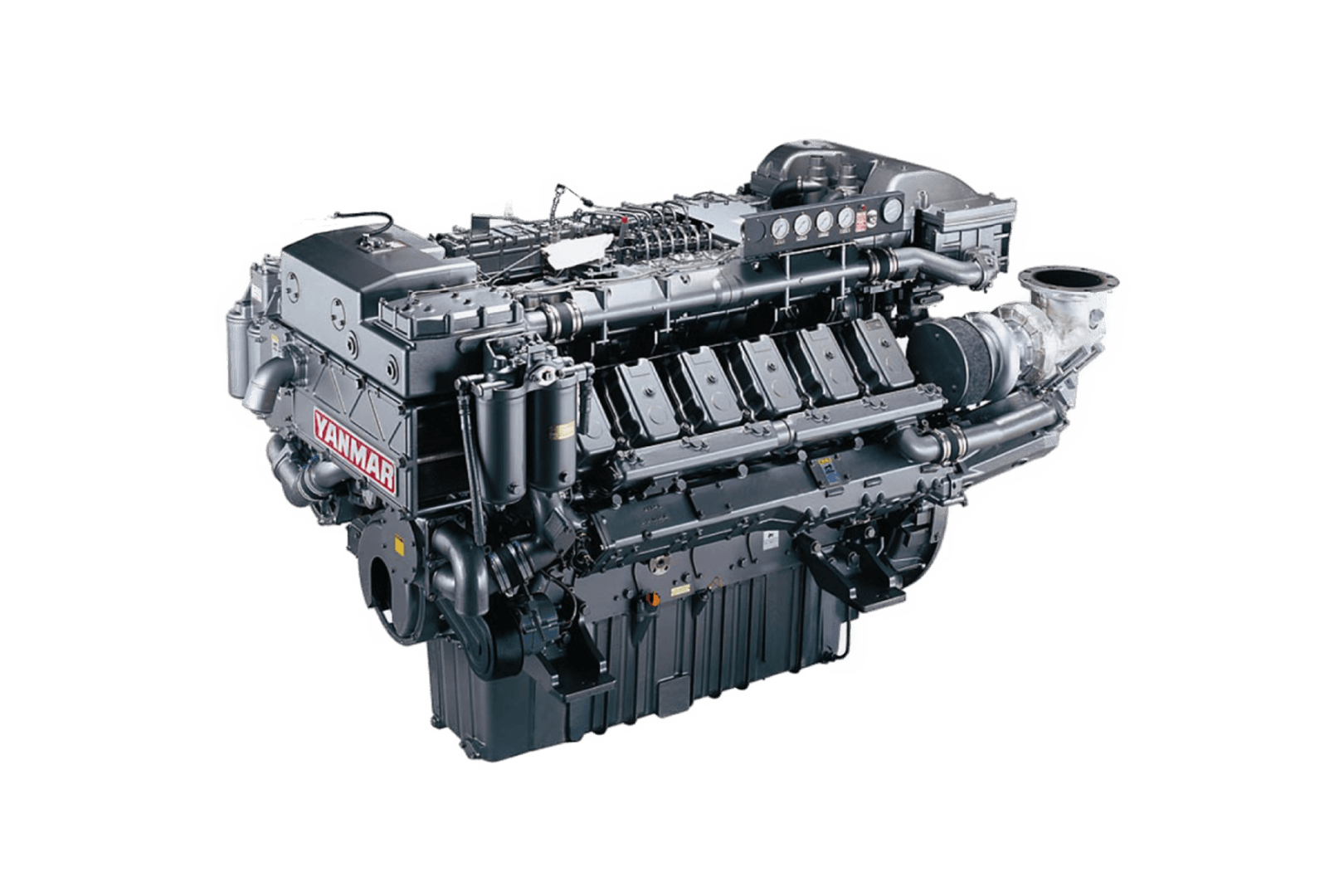
This guide is general reference, not a service manual. Intervals, torques and fluid specifications vary by engine rating, build and duty, and the manufacturer's own operation and maintenance manual is the authority. Part numbers change with serial number — send us yours and we will confirm the right parts before you order.
The MTU 12V 2000 S96 is a 12-cylinder, 60° V-configuration marine diesel engine rated at 1,940 hp (1,447 kW) at 2,450 rpm, built for sustained high-speed operation in fast ferries, patrol craft, crew boats and performance yachts. This guide sets out the engine's specifications, the manufacturer's service intervals, the parts each interval calls for, the faults most often seen in service, and the spares worth carrying on board.
Engine overview
Key specifications
Configuration: 12-cylinder, 60° V-engine
Power output: 1,940 hp (1,447 kW) at 2,450 rpm
Displacement: 23.9 litres
Aspiration: turbocharged and charge-air cooled
Fuel system: common rail injection
Cooling system: fresh-water cooling with heat exchanger
Dry weight: approximately 2,350 kg
Emissions: IMO Tier II compliant applications
Typical applications
High-speed passenger ferries
Offshore support and crew boats
Patrol and military craft
Performance yachts of 35–50 m requiring sustained high-speed operation
Commercial vessels requiring IMO Tier II compliance
Service intervals
Every 250 hours
Or every three months, whichever comes first.
Engine oil and oil filter change
Fuel pre-filter replacement
Visual inspection of all systems
Check cooling system levels
Inspect drive belts and tension
Every 500 hours
Or every six months.
Complete oil and filter change
Replace all fuel filters
Replace air filter elements
Inspect the turbocharger
Check all hose connections
Inspect the raw-water pump impeller
Every 1,000 hours
Or annually. All 500-hour items, plus:
Replace the coolant filter
Replace the raw-water pump impeller
Inspect heat exchanger anodes
Check valve clearances
Inspect the charge-air cooler
Replace the crankcase breather filter
Test all safety systems
Every 2,000 hours
Or every two years.
Complete major overhaul items
Replace timing components as required
Inspect injectors, with testing or replacement as required
Turbocharger inspection and service
Comprehensive inspection of the mounting system
Replace all coolant and flush the system
Maintenance parts by system
Lubrication
Engine oil capacity: approximately 80 litres
Oil specification: MTU-approved oils; SAE 15W-40 for normal operation, SAE 10W-30 for cold-climate operation; ACEA E7 or API CI-4 minimum
Primary oil filters: replace every 250 hours; two are typically required per service
Fuel system
The 2000 series uses common rail injection; contaminated fuel can cause catastrophic injection-system damage, and water in the fuel is a primary cause of injector failure
Pre-filter (water separator): 500 hours
Primary fuel filter: 500 hours
Fine fuel filter: 500 hours
Fuel filters should be genuine OE parts to maintain the injection-system warranty
Air intake and turbocharging
Air filter elements: replace every 500 hours or when the restriction indicator activates; more frequently in dusty environments; replace rather than clean; most installations use a dual-element design
Turbocharger: inspect at 500-hour intervals for unusual noise, vibration and oil leaks; expected service life 8,000–12,000 hours with proper maintenance
Cooling system
Coolant: MTU-approved coolant only, mixed 50 per cent concentrate and 50 per cent distilled water; system capacity approximately 120 litres including the heat exchanger; replace every 2,000 hours or two years
Coolant filter: replace at 1,000-hour intervals; carries the corrosion-inhibitor additives that protect aluminium components
Raw-water pump: neoprene impeller replaced every 500–1,000 hours; inspect for wear, cracks and missing vanes; a failed impeller can overheat the engine within minutes, so a spare should always be on board
Heat exchanger: inspect anodes every 500 hours and replace at 50 per cent depletion; clean tubes annually in salt-water service; pressure test during major service
Drive and electrical
Drive belts: inspect tension at the 250-hour service; replace every 2,000 hours or sooner if wear or cracking is visible; correct tension is critical for alternator and cooling-pump operation
Damper and coupling: inspect at the annual service and check for vibration; replace to the manufacturer's schedule, typically beyond 6,000 hours
Sensors: temperature, pressure and speed sensors should be genuine MTU items; the engine management system is calibrated to them
Common faults and their causes
Fuel injection system contamination
The most common fault on this engine.
Symptoms: rough running, black smoke, loss of power, difficult starting
Causes: contaminated fuel, water ingress, incorrect fuel specification
Prevention: fuel filter changes on schedule, quality fuel, water-separator maintenance
Parts affected: injectors, high-pressure fuel pump, fuel-rail sensors
Cooling system faults
Symptoms: high-temperature alarm, reduced power output
Causes: failed impeller, blocked heat exchanger, low coolant level
Prevention: regular impeller replacement, annual heat exchanger cleaning
Parts affected: raw-water impeller, heat exchanger anodes, coolant filter
Turbocharger wear
Symptoms: loss of power, excessive smoke, unusual noise, high exhaust gas temperature
Causes: oil contamination, air filter neglect, over-speeding
Prevention: clean oil, quality air filters, proper cool-down before shutdown
Sensor failures
Symptoms: error codes, safety shutdowns, erratic gauge readings
Causes: vibration, heat, age, moisture ingress
Prevention: genuine MTU sensors; keep connectors clean and dry
Starter motor and electrical
Symptoms: slow cranking, clicking, no-start condition
Causes: the corrosive marine environment, extended cranking, age
Prevention: keep connections clean and dry; test batteries regularly
Recommended spares
On-board spares kit
Complete set of fuel filters (pre-filter, primary and fine)
Raw-water pump impeller with gasket
Engine oil filters (two)
Drive belt set
Assorted hoses and clamps
Thermostat
A selection of temperature and pressure sensors
Injector leak-off hoses
Heat exchanger anodes
Extended-passage additions
Engine oil of the correct grade, at least one oil change's worth
Coolant concentrate, 10 litres minimum
Fuel additive or biocide
MTU-approved gasket sealant
Spare fuses and electrical connectors
Troubleshooting
Engine will not start
Check fuel supply and filters, and bleed the fuel system of air
Check battery condition and starter connections
Read any stored error codes before clearing them
Overheating
Check raw-water flow and the impeller condition
Check coolant level and concentration
Inspect the heat exchanger for blockage and the anodes for depletion
Loss of power
Check the air filter restriction indicator
Check fuel filters for restriction and fuel for water
Inspect the turbocharger for wear, noise and oil leaks
Abnormal smoke
Black smoke: fuel or air restriction, injector fault
Excessive smoke with unusual noise: turbocharger wear
Fault codes
Erratic readings, safety shutdowns and error codes usually trace to a sensor, its connector or moisture ingress; confirm with the engine management system before replacing parts
Model variants
The S96 is the 1,940 hp variant of the 12V 2000 series, with a higher specific output and an enhanced fuel injection system optimised for sustained high-speed operation. The S90 (1,800 hp) has a lower rating and shares some parts; the M-series workboat engines carry different ratings and certifications with more conservative tuning and some shared components. MTU made running changes throughout production, so part numbers must always be confirmed against the engine serial number.
Genuine parts
Common rail injection on the 2000 series operates at over 2,000 bar; non-genuine injectors can cause catastrophic engine damage and void the warranty. The engine management system is precisely calibrated, so non-genuine sensors can produce incorrect readings, wrong fuel delivery or safety-system failures, and filters are engineered for specific flow rates and filtration efficiency. Using non-approved parts can void MTU factory warranties and extended service agreements. TD Engine Parts supplies genuine, brand-new MTU parts sourced through authorised dealer networks, each with a 12-month warranty, shipped worldwide by DHL Express with the freight quoted alongside the parts.
How to order
Service kits can be quoted for the 250-, 500- and 1,000-hour intervals, or as a custom kit for a major service or an extended passage. To receive an accurate quotation, send:
Engine serial number
Current engine hours
The service interval due, or the fault you are seeing
Part numbers, if known
Delivery country
Send it on WhatsApp or use the contact page; lead times are confirmed with every quotation. Featured MTU stock is listed in the MTU shop.
Related guides
Yanmar 12AYM-WGT Marine Diesel Engine: Parts and Maintenance Guide
Caterpillar C32B Marine Diesel Engine: Parts and Maintenance Guide
MAN V12-2000 Marine Diesel Engine: Parts and Maintenance Guide
Caterpillar C12 Marine Diesel Engine: Parts and Maintenance Guide
This guide summarises general manufacturer specifications. Always refer to the Operation and Maintenance Manual for your engine's serial number, arrangement and rating.