This guide is general reference, not a service manual. Intervals, torques and fluid specifications vary by engine rating, build and duty, and the manufacturer's own operation and maintenance manual is the authority. Part numbers change with serial number — send us yours and we will confirm the right parts before you order.
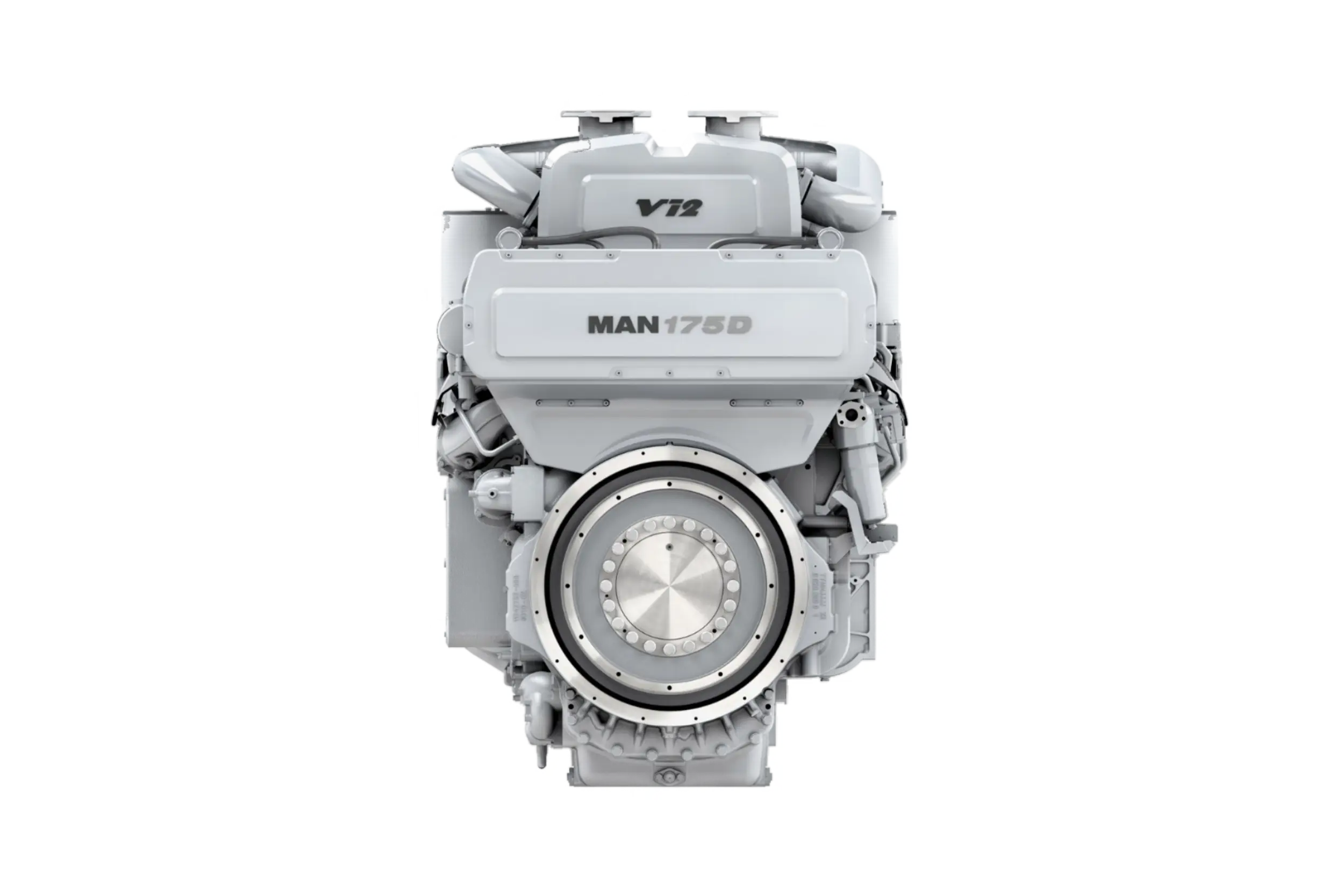
The MAN V12-2000 is a 24.2-litre V12 turbocharged marine diesel engine with common rail direct injection, rated between 1,800 and 2,400 hp depending on rating, built for motor yachts of 80–150 ft and for fast commercial and patrol craft where extended offshore operation demands dependable propulsion. This guide sets out the engine's specifications, its service intervals, the parts each system depends on, the faults most often seen in service, and the spares worth carrying on board.
Engine overview
Key specifications
Configuration: V12 turbocharged diesel
Power output: 1,800–2,400 hp, depending on rating
Maximum torque: 4,200–5,500 Nm
Operating speed: 2,100–2,300 rpm
Displacement: 24.2 litres
Bore and stroke: 128 mm x 157 mm
Aspiration: turbocharged, typically two turbocharger units, with intercooler
Fuel system: common rail direct injection
Cooling system: heat exchanger with raw-water circuit
Dry weight: approximately 2,850 kg
Typical applications
Motor yachts of 80–150 ft
High-speed patrol vessels
Commercial crew transfer vessels
Charter and sportfish yachts
Fast ferries
The V-configuration gives smooth power delivery with minimal vibration, and common rail injection maintains combustion efficiency across the operating range.
Service intervals
Every 250 hours
Or annually, whichever comes first.
Engine oil and filter change
Fuel filter replacement, primary and secondary
Raw-water impeller inspection and replacement
Heat exchanger anode replacement
Air filter inspection, replaced if necessary
V-belt tension check and adjustment
Engine mount inspection
Hose and clamp inspection
Every 500 hours
Complete oil and filter change with oil analysis
Fuel filter replacement
Air filter replacement
Raw-water pump seal inspection
Turbocharger inspection
Valve clearance check
Injector performance check
Coolant system inspection
Battery condition check
Every 1,000 hours
Complete service kit installation
Turbocharger overhaul or replacement
Fuel injector cleaning or replacement
Heat exchanger descaling and inspection
Exhaust system inspection
Engine alignment check
Sensor and electrical connection inspection
Coolant replacement at the correct inhibitor concentration
Every 2,000 hours
Or major service.
Complete engine inspection and diagnostics
Valve train overhaul
Turbocharger replacement
Complete fuel system service
Heat exchanger replacement or comprehensive rebuild
Starter motor and alternator overhaul
Engine mount replacement
Exhaust manifold and component inspection
Maintenance parts by system
Lubrication
Oil capacity: approximately 100 litres, varying by installation
Oil specification: marine diesel engine oils meeting MAN specifications, typically ACEA E7 or API CJ-4; SAE 15W-40 for most conditions, SAE 10W-30 for cold climates, SAE 20W-50 for hot climates or high load
Parts: engine oil filters, oil cooler, oil pump, crankcase breather filter
Fuel system
Fuel: marine diesel (MGO/MDO) with a minimum cetane of 45, sulphur no more than 0.1 per cent subject to local regulations, water no more than 200 ppm and particulates no more than 10 mg per litre; poor fuel quality is the leading cause of marine diesel problems
Parts: common rail injectors (set of 12), high-pressure fuel pump, primary and fine fuel filters, fuel cooler, low-pressure fuel lines, high-pressure fuel rails
Air intake and turbocharging
Parts: turbocharger assemblies, typically two, air filters with inner and outer elements, intercooler, exhaust manifolds, exhaust mixing elbows
Cooling system
Coolant: ethylene-glycol marine coolant with corrosion inhibitors, at a minimum of 50 per cent glycol and 50 per cent distilled water; capacity approximately 60 litres, varying by installation
Raw water: clean sea water or fresh water at an adequate flow rate through a properly filtered strainer
Parts: raw-water pump and impeller kits, heat exchanger assemblies, coolant pump, thermostat assemblies, coolant filter and conditioner, heat exchanger anodes
Drive and electrical
Parts: V-belts, starter motor, alternator, ECU, temperature, pressure and speed sensors, wiring harness components
Common faults and their causes
Turbocharger failure
Symptoms: loss of power, black smoke, high exhaust temperatures, whistling or grinding
Causes: oil starvation, contaminated intake air, exhaust restriction, bearing wear
Prevention: regular oil changes, air filter maintenance, exhaust system inspection
Fuel injector faults
Symptoms: rough running, poor fuel economy, hard starting, black smoke
Causes: contaminated fuel, incorrect fuel specification, injector wear
Prevention: clean, quality fuel, regular filter changes, fuel system treatment
Heat exchanger corrosion
Symptoms: overheating, coolant loss, raw water in the coolant system
Causes: failed anodes, scale build-up, galvanic corrosion, age
Prevention: regular anode replacement, descaling, water quality monitoring
Raw-water pump failure
Symptoms: overheating, temperature alarm, no water discharge from the exhaust
Causes: impeller wear, seal failure, debris ingestion
Prevention: annual impeller replacement, intake strainer cleaning, seal inspection
Common rail system faults
Symptoms: poor starting, rough idle, reduced power, increased fuel consumption
Causes: contaminated fuel, injector wear, high-pressure pump failure, sensor malfunction
Prevention: premium fuel, regular filter changes, fuel additive treatment
Recommended spares
On-board spares kit
Raw-water impeller kit with gaskets
Complete fuel filter set
Engine oil sufficient for one change
V-belts, all sizes
Heat exchanger anodes
Basic gasket set
Coolant
Extended-passage additions
Turbocharger assembly or rebuild kit
Fuel injectors, at least two
Starter motor and alternator
Water pump seal kit
Complete sensor set
High-pressure fuel pump
Engine oil and filters for several changes
Troubleshooting
Engine will not start
Check battery voltage and connections
Verify fuel supply and filters, and check for air in the fuel system
Inspect starter motor operation
Verify ECU power and sensor connections, and stop-solenoid operation
Overheating
Inspect raw-water flow and the intake strainer, and check the impeller
Verify coolant level and circulation, and coolant pump operation
Inspect the heat exchanger for blockage or corrosion, and check the thermostat
Loss of power
Check air filter restriction and turbocharger operation
Verify fuel filter condition, fuel quality and supply pressure
Inspect the exhaust for restriction and verify injector performance
Abnormal smoke
Black: air starvation, injector faults, overload
Blue: oil consumption, turbocharger seal failure
White: coolant leak, low compression, poor fuel atomisation
Unusual noise
Knocking: injector timing, bearing wear, valve clearance
Whistling: turbocharger fault or air leak
Grinding: bearing failure or gear damage
Emergency procedures
Overheat alarm: reduce load immediately, check raw-water flow and coolant level, shut down if the temperature keeps rising, and never open the cooling system when hot
Loss of oil pressure: shut down immediately, check the oil level and look for leaks; do not restart until the cause is identified
Air in the fuel system: bleed at the filter housings and injectors, check all connections for damage or loose fittings, restart and monitor for repeat entry
Installation and records
The engine requires professional installation with correct alignment, vibration isolation and exhaust design: robust engine beds at the correct mounting height, properly sized cooling-water plumbing, fuel supply and return lines to MAN specification, adequate back-pressure control, comprehensive monitoring and alarms, and enough ventilation for combustion air and engine-room cooling. Service records should log every maintenance task, parts replaced with serial numbers, oil analysis results, engine hours at each service and any abnormality; they support warranty claims, troubleshooting and the vessel's value.
Genuine parts
Fuel system components, turbochargers, electronic controls and major engine components should always be genuine MAN parts with full traceability and certification; non-genuine parts in these systems can void the warranty, compromise safety, shorten engine life and cause costly failures at sea. TD Engine Parts supplies genuine, brand-new MAN parts sourced through authorised dealer networks, each with a 12-month warranty, shipped worldwide by DHL Express with the freight quoted alongside the parts.
How to order
Service kits, emergency spares and major components can be quoted against your engine. To receive an accurate quotation, send:
Engine serial number
Power rating and current engine hours
The service interval due, or the fault you are seeing, with photographs if applicable
Part numbers, if known
Delivery country
Send it on WhatsApp or use the contact page; lead times are confirmed with every quotation.
Related guides
MTU 12V 2000 S96 Marine Diesel Engine: Parts and Maintenance Guide
Yanmar 12AYM-WGT Marine Diesel Engine: Parts and Maintenance Guide
Caterpillar C32B Marine Diesel Engine: Parts and Maintenance Guide
Caterpillar C12 Marine Diesel Engine: Parts and Maintenance Guide
This guide summarises general manufacturer specifications. Always refer to the Operation and Maintenance Manual for your engine's serial number, arrangement and rating.